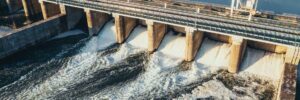
Economic Waste

Given their problematic history, it’s unsurprising that the LSRD have never lived up to inflated estimates of their value. Originally built to facilitate barging goods, they’re no longer essential to transportation. They don’t provide flood control, and only 1 is used for replaceable irrigation. These dams have already cost a fortune, and it’s well past time to cut our losses.

For relevant documentation, please visit Jim’s archive within Resources for Advocates.

Weak Power & High Costs

Claims exaggerating the value of the lower Snake River dams have been made since they were conceived. Authorized on false economic assumptions, they have been wasting tax and ratepayer money ever since.

The Northwest public is told it would go dark in blackouts without these dams and they save the day during extreme events. But Bonneville and the region produce significant surplus energy that’s sold on the external market, often at a loss. The four dams can only produce a fraction of their rated capacity for a few hours at a time, except in spring when it’s not needed and they contribute to forced curtailment of wind power. Being “run of river”, not storage dams, they cannot save water for times of need.

Bonneville’s ascribed power value and sustained peaking in the operative 2020 EIS remains unverifiable. Data and analysis models are withheld. Battelle’s independent review concluded a likelihood of errors. Bonneville’s claim these dams can output 2,500 MW, 10 hours per day for 5 straight days has never occurred even in the most extreme times.

The LSRD lose millions of dollars annually for Bonneville Power Administration, which passes the costs on to consumers. Conditions on the Snake River limit their yield, and what they do produce is unstorable surplus–so that extra energy gets sold on the open market more often at a loss. Ratepayers pick up the bill, while BPA’s federal debt cap keeps getting raised.

Federal and ratepayer derived funds have never been enough to keep these four dams operating at the level of production their promised value was based on, leading to further degradation of turbines already past their life expectancy. Surplus power is continually sold out of region for whatever the market can bear while Bonneville, a federal nonprofit agency, does not allow viewing of the record.

The LSRD produce a fraction of their rated power capacity and barging sparsely uses the navigation channel, but the costs of operating, maintenance, so-called fish mitigation, illegal BiOp do-overs, planning and studying forums and NGO’s are paid in full, 365 days a year. This inevitably results in cost pressure on ratepayers, taxpayers and the public.

Bonneville claims the four dams pay their way and help keep electric rates low with their share of surplus sales revenue, however those numbers are withheld from public view. The law of economics is that oversupply lowers market prices and thus revenue. Since the energy production cost of the four dams is up to double that of Columbia River dams, the recipe is even worse. Were Bonneville or these dams in private or investor ownership, they’d have been retired and breached long ago, as went the Klamath dams. For decades, ratepayers captive to whims of the federal nonprofit Bonneville, have borne the cost of this long running bad business choice.

Nearly one third of Bonneville’s rates are associated with fish and wildlife costs. Much of this cost goes towards habitat restoration projects which will be ineffective until endangered Snake River stocks are recovered.

Associated costs of the four dams include fish passage construction and equipment, operations & maintenance, turbine rehabilitation, navigation and flow dredging, Lower Snake River Compensation Plan hatcheries, fish transport and endless studies. These costs will steeply rise the longer these aging dams are kept in operation.

These dams are supported by a lobbying industry that persuades politicians and public servants to ignore legal obligations and shirk their fiscal responsibility to Americans. Lobbying and consultant fees for media campaigns, relations, and dam preserving legislation are paid by captive payers in utility and trade group arrangements. State and federal governments are charged with protecting wildlife and the public interest. The public is footing the bill to destroy both, when breaching the lower Snake dams would instead cost less and yield more with less effort.

Hydropower Plant

The last of the four lower Snake River dams began operating in the mid 1970’s with the promise of realizing an “Inland Empire”. This dream has never come to fruition.

Since 1980, per capita income in the reservoir area has been on the decline. Economist’s warnings went unheeded and the Northwest has been mired in struggle to right the course ever since.

The LSRD were built to allow barges to carry goods up and down the river to Lewiston, Idaho’s inland port, but they’re no longer needed for navigation. Freight traffic has declined for 20 years. At this point, this heavily subsidized transport can easily be replaced by existing (and less expensive) rail infrastructure right alongside the Lower Snake River.

Likewise, the dams are not necessary for irrigation. Only one dam, Ice Harbor, is used for incidental irrigation that can be replaced by extending pipes to the river, at less cost than preserving the dams. Meanwhile, breaching would expose 8,000 acres of fertile agricultural land–along with the 140 miles of Chinook spawning habitat.

Lastly, the LSRD do not provide flood control.

These dams have already cost a fortune in economic as well as ecological terms. Their anticipated expense to maintain far outweighs the cost of breaching. Just the turbines alone are coming to end of life and prohibitively expensive or impossible to replace.

The highest cost of the LSRD is ecological – and all attempts to mitigate (rather than cease) that damage involve deep financial losses. Meanwhile, they continue to get older and costlier to maintain, while solar and wind energy have replaced their power; energy efficiency has done the same seven times over.

According to a recent peer-reviewed publication, the LSRD have cost an estimated 8 to 9 billion dollars in failed salmon recovery attempts (Jaeger & Scheurell, 2023).

Original purveyors of dams in the west were content to sacrifice salmon. Floyd Dominy of the federal Bureau of Reclamation famously said, “I think that there’s substitutes for eating salmon. You can eat cake.” While acceptance of this never prevailed over those wiser to ecosystem function and legal obligations, hard won measures have only lost ground for Snake River ocean migrating fish in a downward spiraling charade of mitigation while costing billions.

The four dams have come with a litany of plans for plans of study and mitigation going back to shortly after the dams were in full swing and brand new legislation came with the declaration that if the Pacific Northwest fish were to be restored, “this is the mechanism which will do it.” Rep. Dingell’s exuberance for putting fish on equal footing in the NW Power Act was never operationalized.

Decades of negotiating have only brought increasing dysfunction of hatchery fish that displace and degrade dwindling wild fish while attracting predators which are the target of growing and unruly kill programs that can never comport with ecosystem function nor restore salmon.

The lethality of slow hot reservoirs has worsened, with no implemented measures over the many decades achieving a salmon-suitable temperature. The four Army Corps dams are out of water quality compliance plain and simple but are given a free pass to violate.

Year after year, the Fish Passage Center re-informs the lower Snake must be naturalized and only breaching will achieve what’s needed.

Solutions for critically endangered Southern Resident Orcas, who are heavily reliant on Snake River Chinook salmon, have been scant. While federally and state listed for decades, they’ve only received slightly reduced underwater noise and deference to hatchery fish production in the orcas name. These fish are inferior, harm wild fish and also supply fisheries. Results are a cherished orca population teetering on the edge of an extinction vortex and continued loss of babies.

There’s simply no substitute for wild fish finding their own way through a natural free flowing river to intermingle with the web of life they’ve co-evolved with for millennia.

Media

tbd